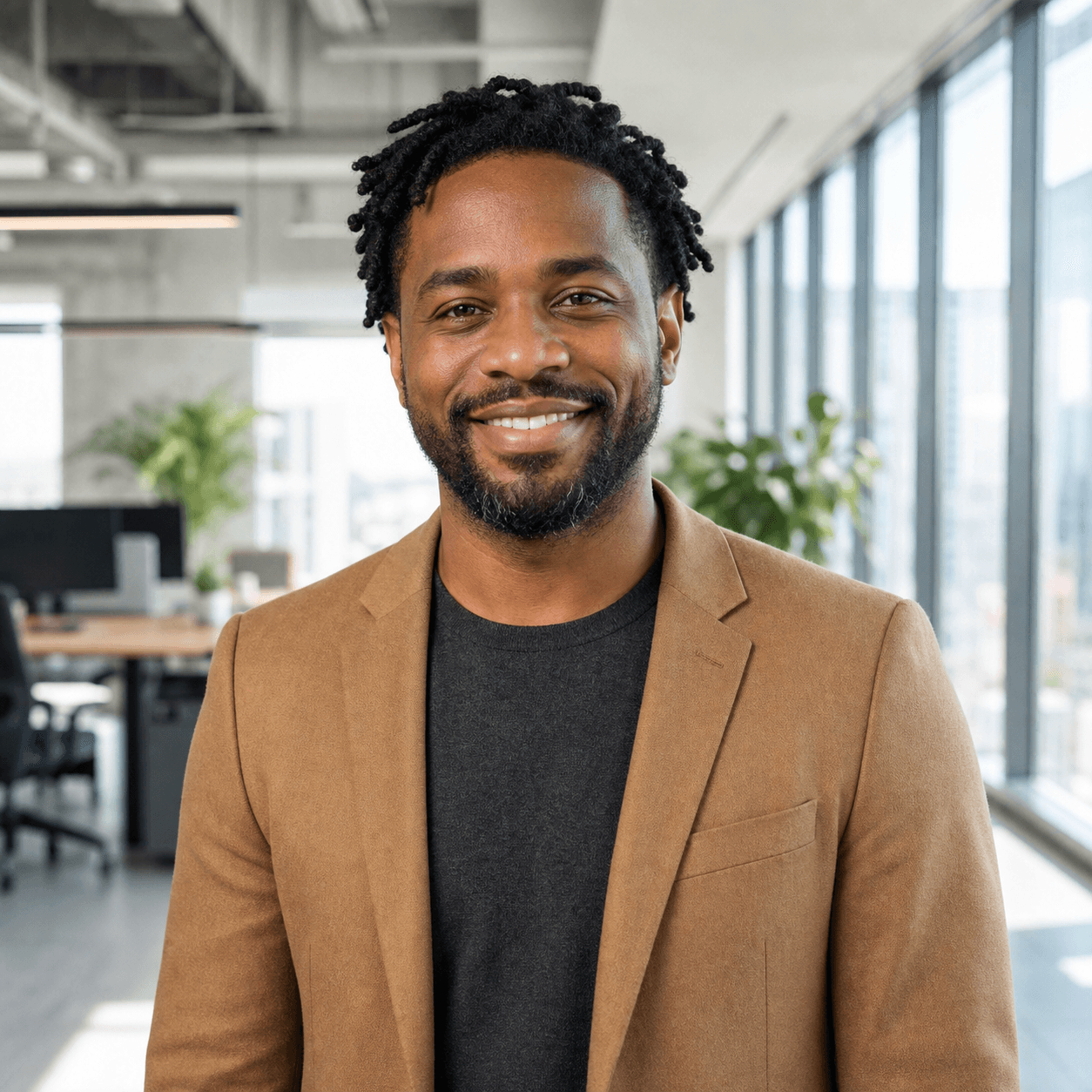
Higor D.
Agentic AI Workflow Engineer · 9 yrs / 4 in AI
Florianopolis, BR · EST +1 overlap · C1 Advanced
- LangGraph
- Tools
- FastAPI
- AWS
Nearshore AI engineers
We help US companies hire senior AI engineers from Argentina, Brazil, Colombia, and across LATAM. Engineers who have shipped production AI systems - not just experimented with APIs - working your hours, embedded in your team.
Founded by senior engineers. Not a recruiting firm. Not a resume board.
Agentic AI Workflow Engineer · 9 yrs / 4 in AI
Showing Higor D., profile 1 of 5
Vetted profiles
Senior LATAM engineers with production experience in RAG, agents, LLMOps, infrastructure, and AI product development. Vetted for technical depth, English communication, and working-hour overlap with US teams.
Pick the right lane
Most vendors staff both from the same pool. We don't - the skills barely overlap, and stapling them together is how you end up with an "AI engineer" who can talk about transformers but can't ship a reliable production endpoint.
For teams building copilots, agents, RAG systems, or embedding AI into an existing product. Software engineering first: prompt reliability, latency, cost control, and graceful failure in production.
For teams training or fine-tuning models, building data pipelines, or doing applied research. Math-and-data first: data quality, evaluation methodology, and getting a model from notebook to production without degrading.
The screening problem
A lot of engineers can call an API. Very few can design a RAG pipeline that does not hallucinate in production, build an agent loop that handles edge cases, or scale a vector search system under real load.
The market right now is flooded with engineers who added "LLM experience" to their CV after spending a weekend with ChatGPT. Identifying who has actually shipped production AI - who understands chunking strategies, retrieval quality, latency tradeoffs, and prompt reliability at scale - requires someone who has done that work.
We were engineers before we were a hiring firm. Our screening process for AI engineers was built by people who have designed these systems. That is the difference between sending you a candidate who can demo a chatbot and one who can own your AI infrastructure.
What we screen for
We ask for real systems, not projects. What did you build? What broke? What did you do when the model started drifting? Engineers who have shipped know how to answer these questions. Engineers who have only experimented do not.
AI engineering is mostly not the model. It is the data pipeline feeding it, the retrieval layer around it, the evaluation framework catching regressions, and the infrastructure keeping it cost-efficient. We screen for the full stack, not just prompt writing.
AI engineers on product teams need to explain model behavior to non-technical stakeholders, push back on unrealistic requests, and translate business goals into system design. We assess this directly, not just technical output.
Async documentation habits, proactive communication, self-direction, and the ability to work independently without daily hand-holding. These are non-negotiable for nearshore roles.
Not just functional English - clear enough to participate in architecture discussions, write technical specs, and give and receive code review feedback without friction.
Need the production pipelines and analytics infrastructure that feed these systems? See Hire Nearshore Data Engineers. Data engineering and AI engineering are adjacent roles with different ownership and vetting requirements.
What we place
Chunking, embedding, vector search, reranking, hybrid retrieval, and evaluation pipelines. Engineers who understand why retrieval quality is harder than it looks.
End-to-end AI product engineering - prompt architecture, output parsing, fallback handling, latency optimization, and cost management at scale.
Multi-step agent loops, tool use, memory systems, and reliable orchestration. Engineers who have dealt with agent failure modes in production.
API integration, model evaluation, fine-tuning, and switching between providers without rewriting your application logic.
Ingestion, parsing, OCR, metadata extraction, Pinecone, Weaviate, pgvector, and production-grade document processing at volume.
The pipelines that feed models: data quality, labeling infrastructure, feature stores, and training data management.
Model deployment, serving infrastructure, monitoring, regression detection, and the MLOps layer that keeps production models reliable.
Engineers who understand what it means to build AI in regulated environments - audit trails, explainability requirements, and data handling constraints.
Nearshore vs offshore for AI
AI development is iterative in a way that most software is not. You run an experiment, look at outputs, discuss what went wrong, adjust a prompt or retrieval strategy, and run it again. That loop requires fast feedback, which means it requires overlap.
Experiments run overnight. Feedback arrives the next morning. Iteration cycles that could take hours take days. Debugging a hallucination requires a 24-hour back-and-forth.
Your team reviews outputs together. Architectural decisions happen in real time. A blocked experiment gets unblocked in the same standup. Iteration speed is a competitive advantage.
For AI engineering specifically, nearshore is not just a cost decision. It is a product velocity decision.
Seniority levels
We generally recommend mid-level or senior engineers for AI roles. Junior engineers can grow into AI work, but most teams hiring nearshore AI engineers need someone who can contribute independently from week one, not someone who needs to be taught what a vector database is.
Where we recruit
LATAM has a growing base of AI engineering talent, concentrated in countries with strong computer science programs and established tech industries. We recruit across the region and match candidates to your role based on seniority, stack, English level, time zone, and rate expectations.
Argentina and Brazil tend to have the deepest AI engineering talent pools. Colombia and Mexico are growing fast, with strong English proficiency and favorable time zones for US East and Central teams. We help you decide where to focus based on your role, budget, and urgency.
How it works
Not just "AI engineer." Tell us the system: RAG product? Agent framework? Document pipeline? Fine-tuning workflow? The more specific your brief, the faster we find the right match.
Technical assessment, production AI experience review, communication screen, availability check. You only meet engineers who are qualified, available, and ready to interview.
Use your existing technical interview process. We coordinate scheduling, feedback loops, and offer details. You make the call.
Contractor setup, payroll, onboarding, equipment, IP agreements. The engineer shows up ready to open a PR, not waiting on paperwork.
Nearshore model
Nearshore Developers & EOR, Explained. The guide explains nearshore development, EOR, payroll, compliance, and ongoing support before you choose a specific role, country, or industry page.
Related hiring paths
Frequently asked questions
Our average time to hire is 14 days. For AI engineering roles, timelines depend on how specialized the requirements are. Senior RAG engineers or staff-level ML engineers may take slightly longer than mid-level full-stack engineers with AI experience. Giving us a specific brief - stack, system type, seniority - accelerates the search significantly.
Python is the dominant language for AI engineering in LATAM, as it is globally. Common stacks include Python with LangChain, LlamaIndex, or custom orchestration; OpenAI, Anthropic, and open-source models; vector databases including Pinecone, Weaviate, Chroma, and pgvector; FastAPI for serving; and cloud infrastructure on AWS, GCP, or Azure.
Yes. With 4-8 hours of daily overlap depending on country and role, your nearshore AI engineer can participate in standups, architecture reviews, experiment retrospectives, and live debugging sessions with your team.
Senior AI engineers from LATAM typically cost 40-60% less than equivalent US hires, depending on country, seniority, and specialization. We give you an honest salary range for your specific role before you commit to anything.
AI engineers typically focus on building applications on top of existing models: RAG systems, agents, LLM integrations, and document pipelines. ML engineers typically focus on training, fine-tuning, evaluation, and serving models themselves. Many teams need both.
Yes. These are two of our core industries. We understand audit trails, explainability, data handling constraints, and the need for engineers who can communicate clearly with compliance and legal teams.
We provide replacement support. If an engineer is not working out - performance, fit, communication, or anything else - we help you find a replacement without starting the process from scratch.
Ready to hire
Share the role, the system you are building, your tech stack, and your timeline. We will come back with an honest view of the market, expected salary range, and how fast we can move.
No commitment. No sales deck. Just a direct conversation about whether we can help.